Update from the Chief Engineer: Mayonnaise in the engine and other troubles

Since we left, our engine - a Volvo Penta MD22A, 4 cylinder, 60 HP, diesel - has been running great. But it started out real bad: As you know we were delayed two days in our departure, because we found something very wrong with the oil.
Last season we only used the engine for 15 hours and I deemed it not necessary to change the oil this season. But a couple days before our planned departure I slept bad and had weird dreams that made me change my mind: I decided to change the oil anyway - just to be sure - and here is what I found:
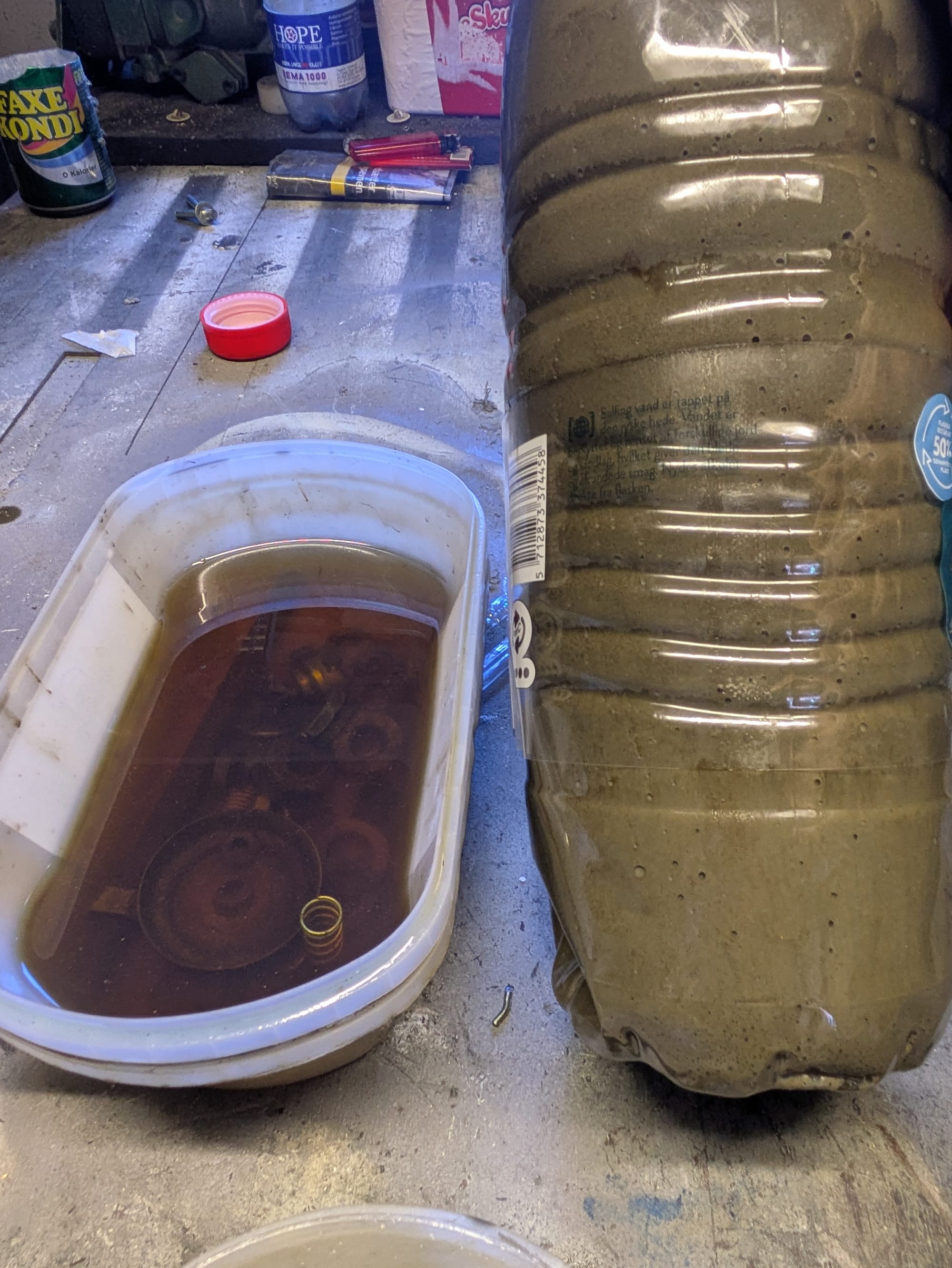
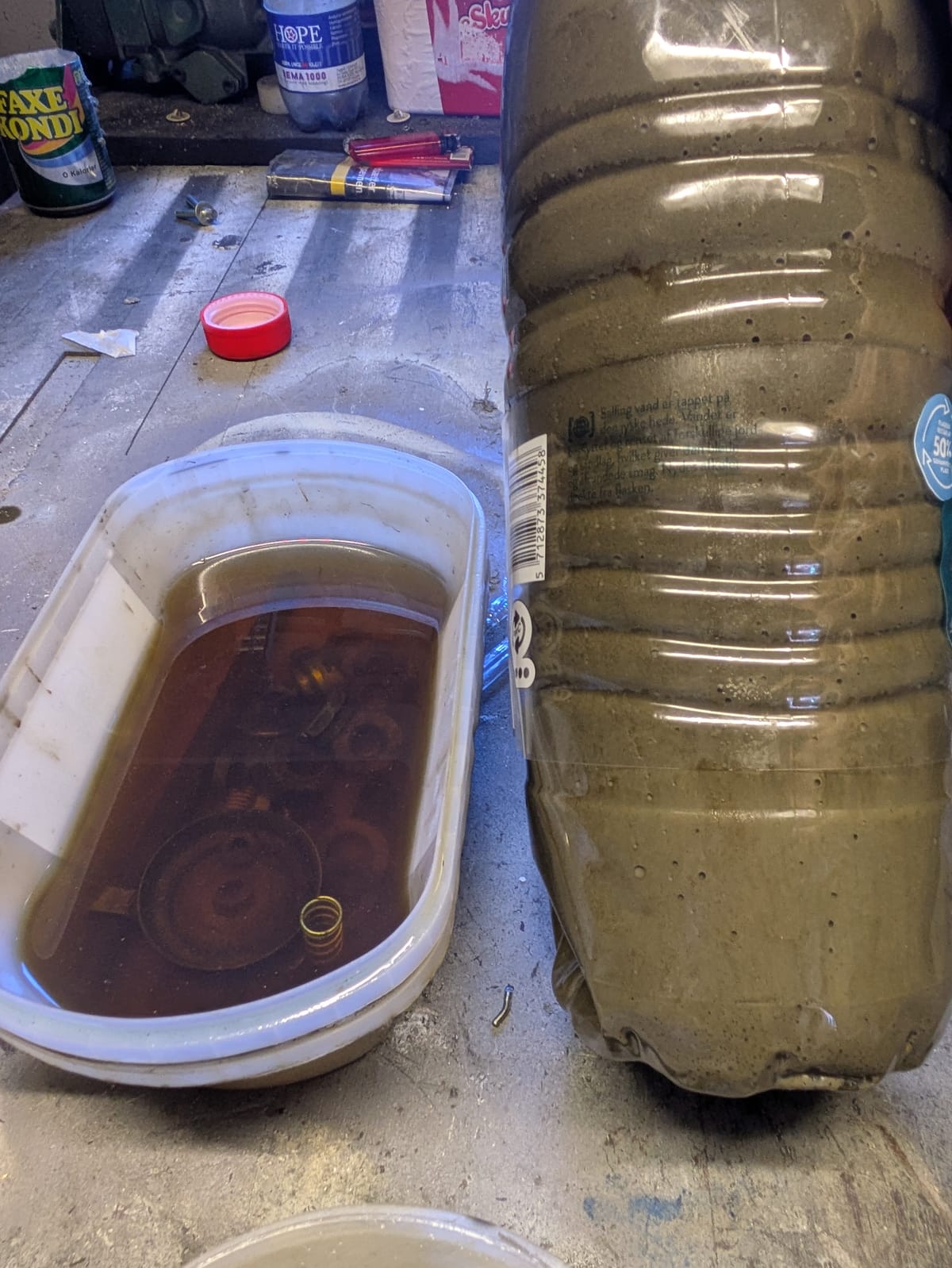
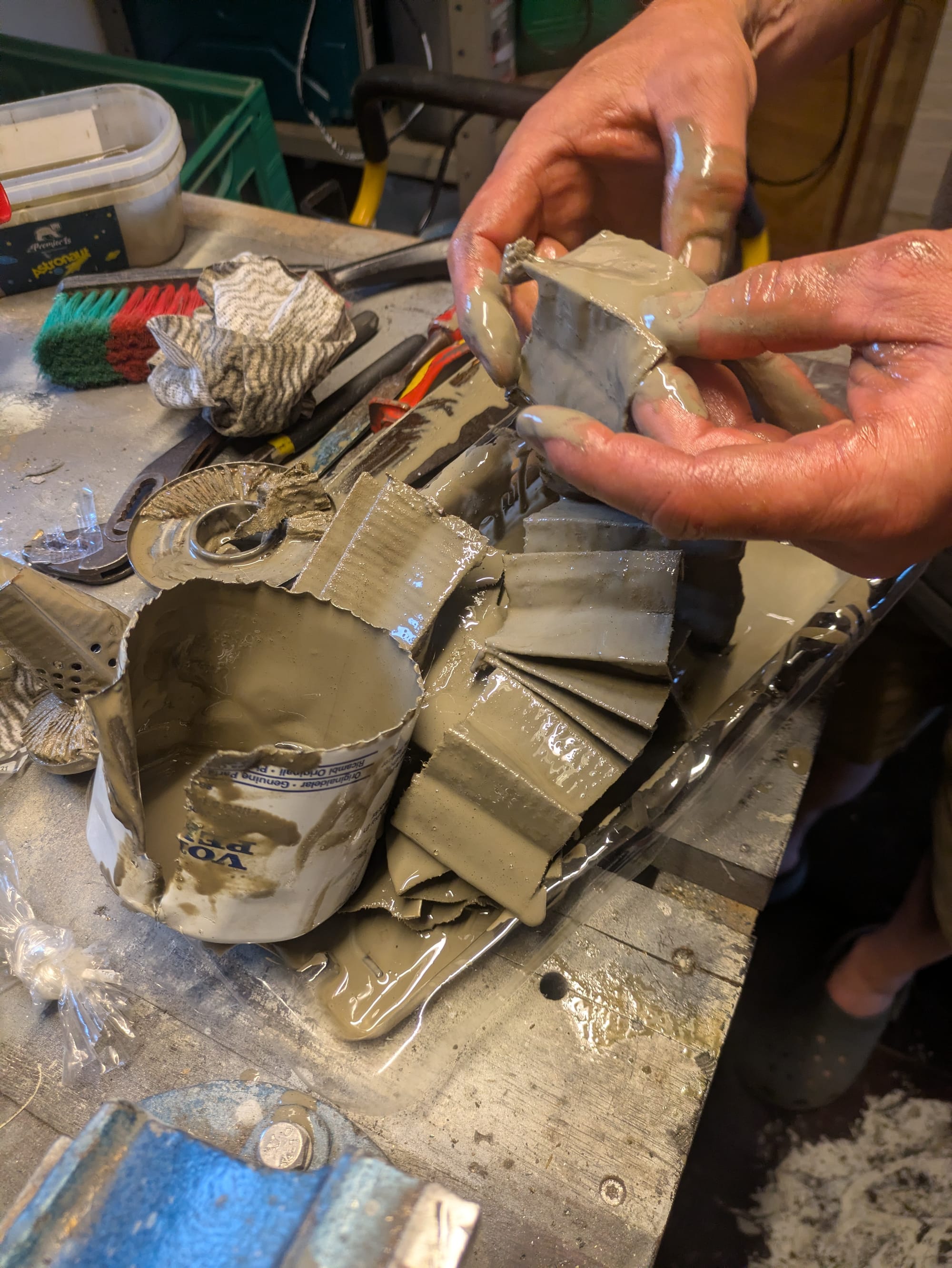
This is how engine oil looks when water has entered the oil gallery. The oil turns into a mayonnaise like substance when mixed with water by all the moving parts churning the oil and water together - much like mixing a dressing. See the normal oil in the container to the left for reference.
If water enters the oil it will lose its lubrication ability and the engine can suffer a catastrophic breakdown. I examined the oil filter for metal scraps, but fortunately didn't find any.
In an engine like ours, the source of the water can be either the coolant system or saltwater that is sucked into the heat exchanger - to cool the coolant - and pumped back out through the exhaust system. In neither of these two paths the oil should get contaminated, but it can happen for various reasons, some more severe than others. I made a small video explaining the issue here:
The cooling system: Raw water and coolant
A major step forward in our debugging of this problem was that we identified the water as salt water. First, when we pumped out the contaminated oil, we noticed that the first couple deciliters was actually water, which we stored in a plastic bottle for later examination.
I brought the horrible smelling stuff back home and discussed with my wife Lisbeth how I could figure out if it was salt or fresh water? There must be some kind of chemistry I could do to discover this. While I was rambling, she took a quick sip from the bottle and said: "It's salt water!". Problem solved :-) Inspired by her non-nonsense approach, I built up the courage to taste it myself, and sure enough, it was definitely salt water.
As mentioned in the video, the problem was related to the anti-siphon valve. But the valve itself was not really the villain. The real problem was something stupid I had done myself a couple of seasons ago.
Our engine uses seawater for cooling. When the engine is running, seawater is pumped through the cooling system and eventually out through the exhaust. To prevent seawater from being sucked or siphoned back into the engine after shutdown, there is an anti-siphon valve. Its job is simple: when the engine stops, it lets air into the system so the seawater can drain away safely instead of continuing to flow where it should not.
When the engine is running, a small amount of seawater can come out of this valve. Normally, a small hose leads that water down into the bilge so it does not drip all over the engine.
At some point, I decided I did not like having that water end up in the bilge. So I put the hose into a bottle instead, so the water could collect there.
That seemed clever at the time.
It was not clever.
The problem is that the hose also needs to be able to suck in air when the engine stops. If the end of the hose is above the water in the bottle, that works fine. But if the bottle fills up and the end of the hose ends up under water, then no air can get back into the anti-siphon valve.
And that means the anti-siphon valve is effectively disabled.
Normally I empty the bottle often enough that this does not happen. But this season I forgot. The bottle filled up, the hose ended up under water, and the anti-siphon valve could no longer do its job. As a result, seawater was able to find its way back through the exhaust system and into the engine.
So in the end, the solution was almost embarrassingly simple: we lifted the hose back out of the bottle and let the small amount of water from the anti-siphon valve drip into the bilge, exactly as the system was designed to do.
In other words: the anti-siphon valve was not broken. I had accidentally prevented it from working.
So what can we learn from this?
1) Sometimes the “improvement” you make to a boat system is exactly what breaks it. The little hose was supposed to breathe. I had turned it into a straw sitting in a bottle of water
2) That we are amateurs, I guess :-( But we learn and hopefully we learn enough to make it through the voyage. Hopefully.